A shuttle bus connecting Postojna Cave and Predjama Castle. Two passengers are standing in front of the bus.

Shuttle Bus: Postojna Cave – Predjama Castle

From 27 June to 30 September 2026, a shuttle bus operates between Postojna Cave and Predjama Castle for visitors to both attractions (subject to seat availability). The journey takes approximately 20 minutes.
Read more
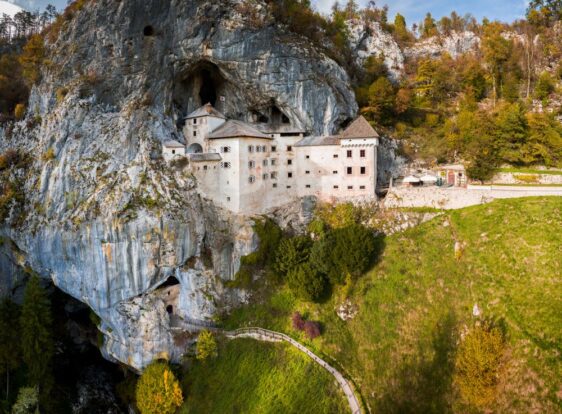
Predjama Castle is built into a towering rock face, its white façade, grey roof, and traditional shutters blending seamlessly with the cliff. The coat of arms of the castle’s last noble family adorns the façade, while below it lies the entrance to the Cave beneath Predjama Castle.

Cave Beneath Predjama Castle

The Cave beneath Predjama Castle is the second-longest tourist cave in Slovenia, stretching through several levels beneath the towering cliff into which the famous Predjama Castle is built. Around 14 kilometres of passages have been discovered, with approximately 700 metres open to visitors. The tourist route leads through fascinating sections of the cave, including the Horse Stable, Main Passage, Passage of Names, Great Hall, and Fiženca, where the cave opens back onto the surface. Spread across four interconnected levels, the cave reveals a spectacular underground world of chambers, passages, and dramatic karst formations.
Read more
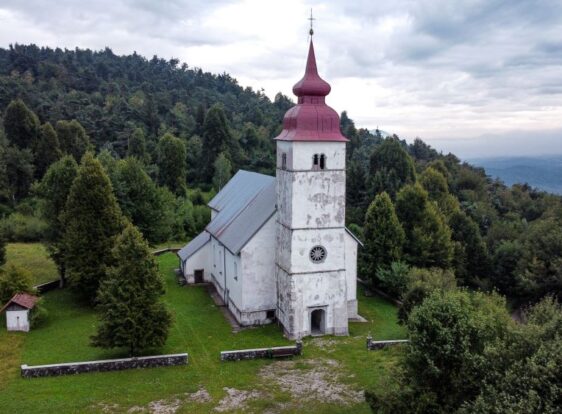
A white church with a red bell tower on Planina Hill, surrounded by a small chapel and lush green countryside.

Pilgrimage Church of Mary on Planinska Gora

Perched on Planinska Gora, between the peaks of Grmada and Petričev Hrib, stands the Pilgrimage Church of Mary, Refuge of Sinners, one of the region’s most important sacred landmarks. For centuries, it has attracted pilgrims from the regions of Notranjska, Dolenjska, Istria, the Gorizia region, and even Tolmin. Mentioned by Johann Weikhard von Valvasor, the church stands at an elevation of around 900 metres and has a long tradition of pilgrimage dating back several centuries. The present church, a striking blend of Baroque and Gothic architecture dating from the 17th century (its main portal bears the year 1633), is distinguished by its barrel-vaulted nave, finely crafted stone details, and dramatic setting high above the Planina Polje.
Read more
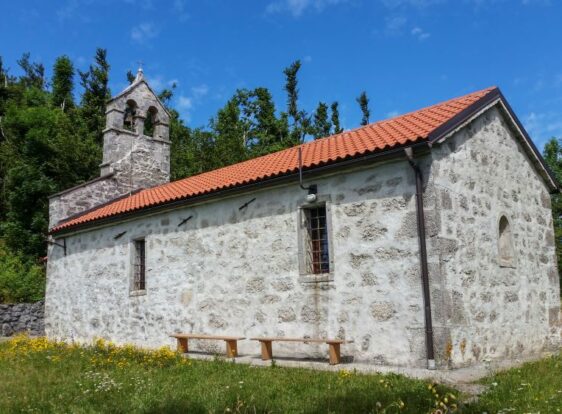
A small stone church with a red roof stands atop St Lovrenc Hill, surrounded by open meadows.

Church of St Lawrence above Studeno

The Church of St Lawrence stands in a picturesque setting just below the summit of Gora, also known as Sveti Lovrenc (1,019 m), above the village of Studeno. It is one of the oldest sacred sites in the Postojna region. A branch church of the Parish of Studeno, it was first mentioned in historical records in 1391. Its Romanesque core has been preserved, while characteristic features of Istrian architecture can still be seen in its unrendered stone walls and robust stone window frames. The church’s simple yet harmonious design is complemented by a traditional stone bell gable dating from the 17th century.
Read more
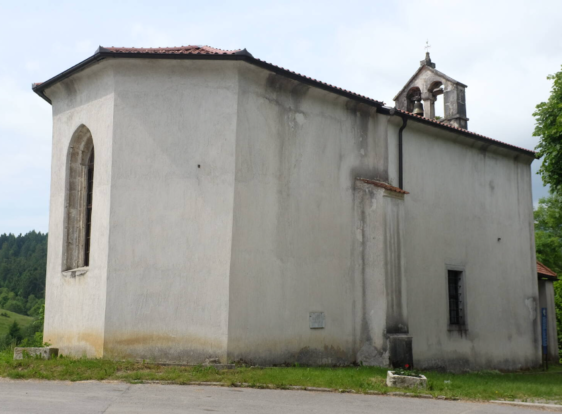
Slika cerkve žalostne matere božje v Predjami. Na desni strani lahko vidimo liste lipe.

Church of Our Lady of Sorrows in Predjama

The Church of Our Lady of Sorrows in Predjama is a Gothic single-nave church with a beautifully rib-vaulted chancel, consecrated around 1450. The consecration was performed by Enea Silvio Piccolomini, then Bishop of Trieste and later Pope Pius II. Its Gothic architecture, Renaissance portal, and Baroque altar reflect centuries of religious devotion and artistic heritage. Instead of a traditional bell tower, the church bell hangs in a distinctive stone bell gable.
Read more
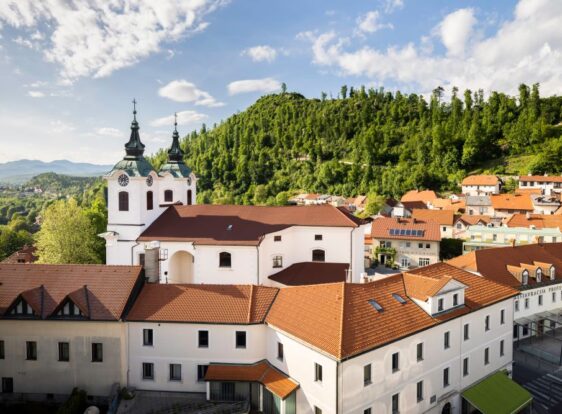
Panoramic view of Postojna’s historic town centre and Sovič Hill, rising above the town. In the foreground stands the Church of St Stephen.

Church of St Stephen

Standing in the heart of Postojna, the Church of St Stephen is the town’s main parish church and an important landmark that reflects both its religious life and cultural heritage. The church was built in the 18th century, as documented in historical records from the period when Postojna was developing around its main town square. Its bell tower and façade reflect the architectural style of the time, while the interior is enriched with fine sacred furnishings and artworks added over the centuries. The church is dedicated to St Stephen, the patron saint of horses, reflecting the vital role these animals once played in the local economy during the heyday of horse-drawn trade and transport.
Read more
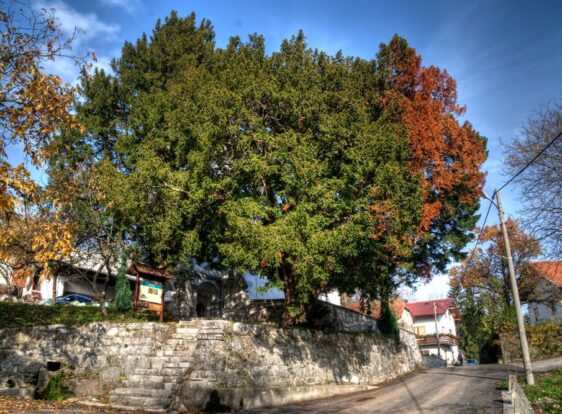
The photograph shows the ancient yew tree in Strane, a magnificent tree with a dense canopy standing beside a stone wall and a flight of steps in the heart of the village. Traditional houses and the village road frame this remarkable natural landmark.

The Old Yew Tree in Strane

In the village of Strane near Postojna grows one of the region’s most remarkable natural landmarks – the ancient yew tree (Taxus baccata), considered the thickest and one of the oldest yew trees in Slovenia. Standing in front of the Church of the Holy Cross, it rises to a height of more than 11 metres, with a trunk circumference of approximately 385 centimetres. This makes it one of the country’s most impressive, protected trees. Experts estimate its age at between 500 and 600 years, although local tradition attributes to it a far longer history.
Read more
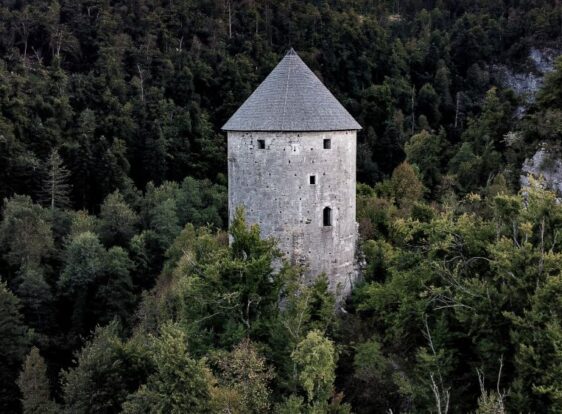
A stone fortress standing amidst the forest, watching over the surrounding landscape and the Postojna Region. Its commanding presence makes it a silent guardian of Planina Polje and the wider Postojna area.

Ravbar Tower

Ravbar Tower stands on the southern edge of the Planina Polje, close to Planina Cave, and was first mentioned in historical records in 1444. The tower is the last surviving remnant of the medieval Little Castle and is renowned for its Gothic architectural features, including a preserved chapel on the upper floor. The castle was named after Nikolaj Ravbar, the governor of Trieste, and once guarded the important trade route between the Ljubljana Basin and the Slovenian Littoral. Perched on a rocky pier above the head of the Unica River valley, it offered its owners a commanding view over the Planina Polje while protecting their estate.
Read more
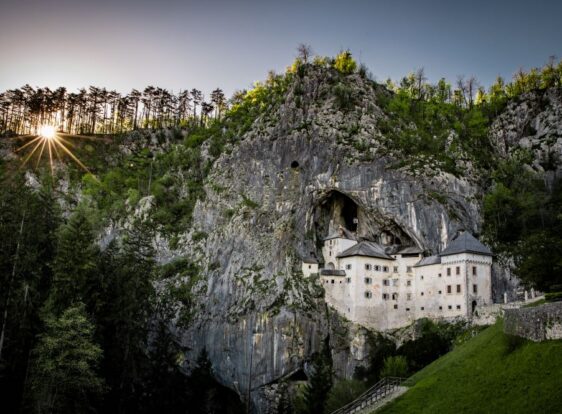
The photograph shows Predjama Castle at sunset, dramatically emerging from the towering cliff face.

Predjama Castle

Predjama Castle is one of the world’s most spectacular castles. For more than 800 years, it has been dramatically built into a 123-metre-high cliff and is listed in the Guinness World Records as the world’s largest cave castle. Its breathtaking setting and rich history create an unforgettable visitor experience. The castle is inseparably linked to the legend of Erasmus of Predjama, the rebellious knight who famously withstood a siege for more than a year. Tales of secret passages, courage, and betrayal continue to capture the imagination of visitors from around the world.
Read more
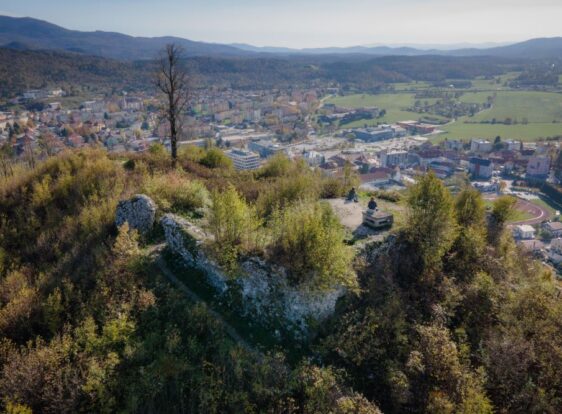
The photograph shows the remains of Adelsberg Castle, also known as Postojna Castle, overgrown with shrubs and lush vegetation. At the summit, a solitary linden tree continues to withstand the passage of time, even after the devastating ice storm, standing as a symbol of the resilience, strength, and perseverance that define the people of Postojna.

Ruins of Adelsberg Castle

Perched at the top of the Sovič Hill, the ruins of Postojna Castle (Adelsberg), also known as the Old Castle, overlook Postojna and offer beautiful views of the town, the Postojna Cave, the Cave Mansion, and Mount Nanos. The first recorded owners of the castle were the Counts of Andechs in the 12th century, although the fortress is believed to be of even earlier origin. Once the seat of the extensive Postojna estate, the castle occupied a strategically important position, controlling the karst passes and protecting the Postojna Basin. Its ruins can be reached via a well-maintained forest trail that is open throughout the year.
Read more