


Here is everything you need to know for a smooth visit.
The trail links several sites across Planina polje and Planina, where visible remains of the former state border between Kingdom of Yugoslavia and Italy can still be found. Allow up to two hours to complete the walk, as the trail is four kilometres long.
During the period between the First and the Second World War, the small market town of Planina was profoundly marked by the Rapallo border separating Yugoslavia and Italy. Even today, it preserves numerous traces and stories from a period remembered in Slovenia as one of unjust division. The border was established under the Treaty of Rapallo, signed on 12 November 1920. As a result, Slovenia lost its cultural and economic centres of Trieste and Gorizia, access to the sea, and more than a third of its ethnic territory, while many Slovenians endured decades of forcible assimilation and violence.
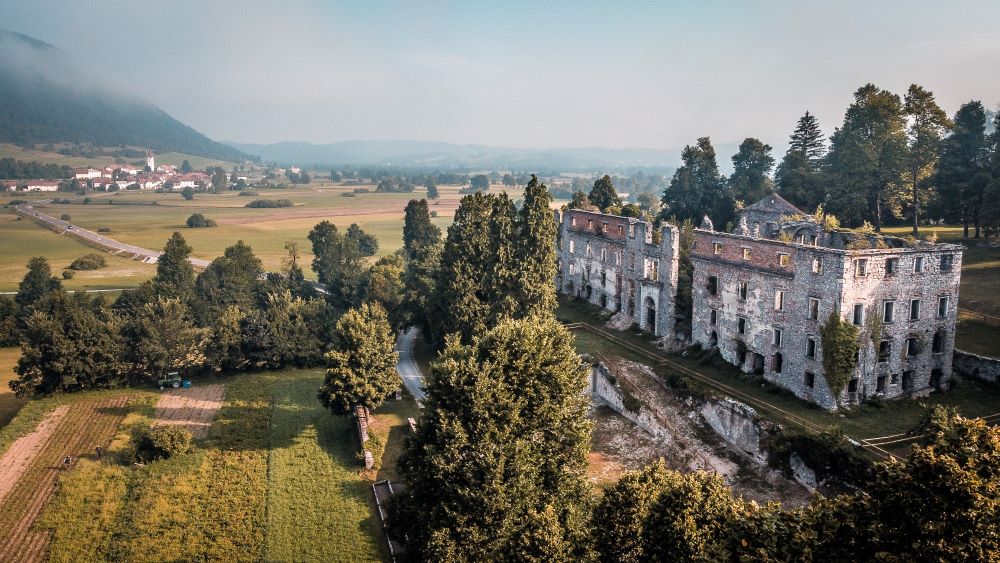
The interwar period in Planina was a time of daring smuggling tales, bloody acts of revenge, rampages by Italian soldiers, shootouts between border guards, international disputes, fascist violence, and even a visit by Mussolini, who spoke here of friendship between the two countries just three years before Italy once again occupied Yugoslavia. Today, the border markers stand as silent witnesses to a period that left deep scars on the village of Planina, from abandoned hamlets and the ruins of a once-grand manor house to memories of neighbours separated by an unjust border.
The trail features eight interpretive stops highlighting the remains of the Rapallo border, including preserved boundary stones and the site of what was once Slovenia’s busiest road border crossing. It also introduces visitors to the Alpine Wall, the Italian defensive fortification system, represented in the Planina area by five separate defensive complexes.
Practical info
More information about the trail is available on the Planina Historical Trail website.
If you arrived at the trailhead by car, you can park in front of St. Margaret’s Church in Planina.
There are no restaurants or shops in the immediate vicinity of the trail, so we recommend bringing a snack with you.